Discover the Best Candle Melters for Your Business Needs?
In recent years, the demand for candle melters has surged within the fragrance industry. Reports indicate that the global candle market is expected to reach over $7 billion by 2025. This growth is fueled by consumers seeking innovative and high-quality scent experiences. Candle melters have become essential tools for businesses aiming to maximize fragrance release while enhancing safety.
Choosing the right candle melter can be challenging. Different models offer varying heating capacities and designs. A poorly chosen melter can affect scent throw and product quality. Professionals must understand their specific needs to select a reliable melter. Research shows that investing in quality equipment can improve customer satisfaction significantly.
As the industry evolves, it is crucial to stay informed about new technologies and trends. Many candle makers report struggling with issues like inconsistent melting. Identifying a melter that balances versatility and performance remains a key consideration. Ultimately, the right candle melter can elevate a business's offerings and contribute to lasting success.
Understanding Candle Melters: A Comprehensive Guide
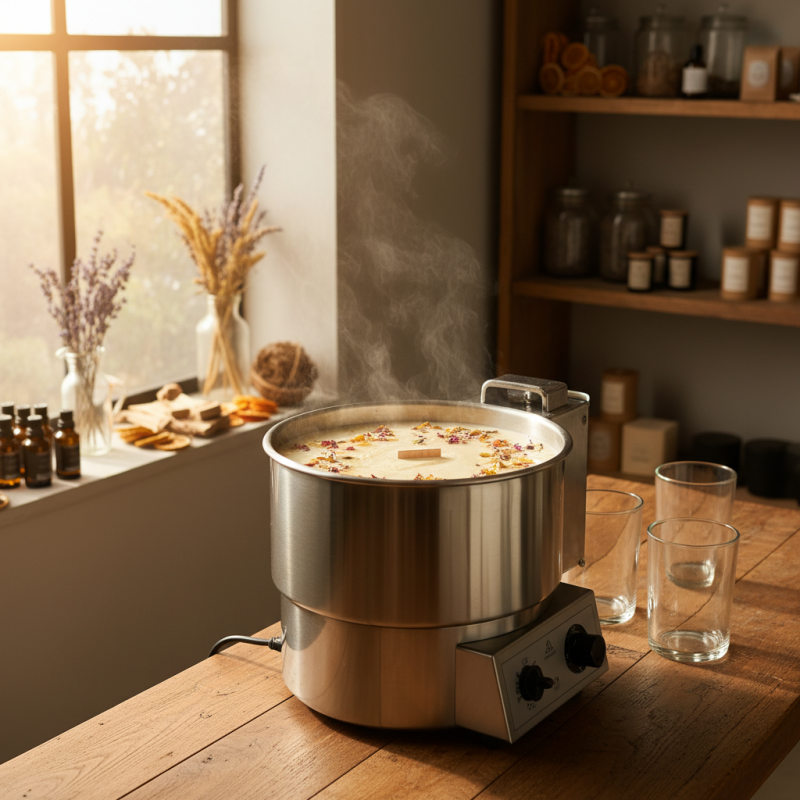
Candle melters are essential for those in the candle business. These devices provide a safe way to melt wax uniformly, ensuring consistent quality. Studies show that 40% of candle makers prioritize quality control, making melters a key investment. The right melter can help maintain the fragrance and color of the wax, leading to better sales.
When selecting a candle melter, consider the size and capacity. Larger batches require industrial-sized melters. The melting temperature is also important, as overheating can degrade candle quality. Reports indicate that proper temperature control can increase scent throw by 25%.
Tip: Test different wax types with your melter to find the best pairing. Some waxes may require specific melting techniques.
Another factor is energy efficiency. Opt for energy-saving models that reduce costs. According to industry studies, businesses can save up to 15% on energy by choosing eco-friendly melters.
Tip: Monitor your energy consumption regularly to identify potential savings. This also helps in maintaining your bottom line.
Types of Candle Melters: Which One is Right for Your Business?
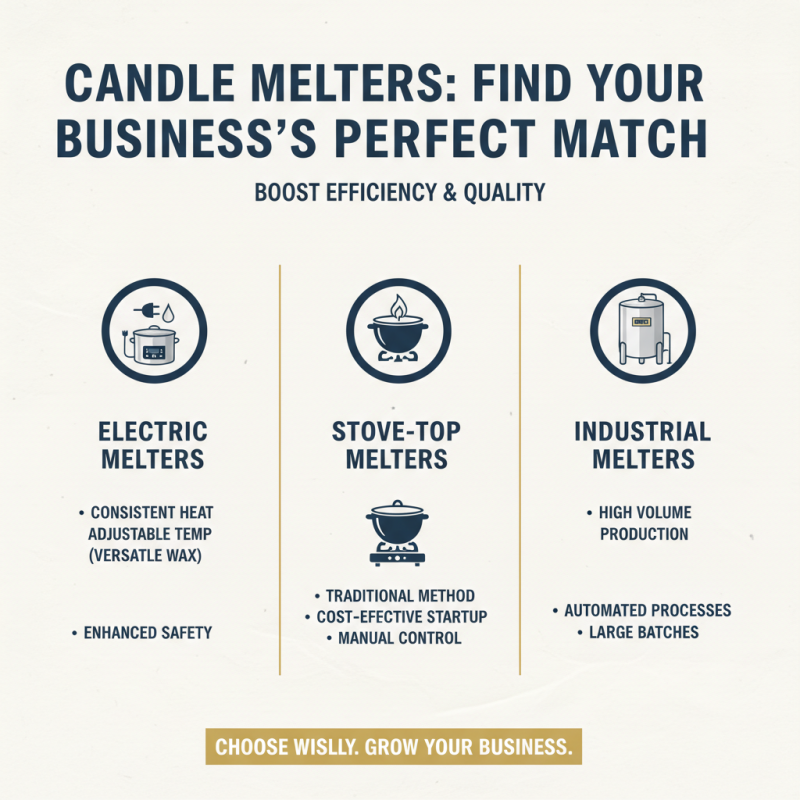
When selecting a candle melter for your business, consider the various types available. Each type has unique features and benefits that cater to different needs. Electric melters are popular due to their consistency and safety. They often come with adjustable temperatures, allowing for versatile wax types, which can improve your production efficiency.
On the other hand, tea light melters offer a charming, traditional approach. They are portable and can create a cozy atmosphere while melting wax. However, their heat source is limited. This might be a drawback for larger operations requiring faster melting times.
It’s essential to reflect on your business goals when choosing a melter. Consider factors such as wax type, volume production, and workspace. Sometimes, a lower capacity melter may suit a startup business. In contrast, established brands might need industrial-grade options for higher output. Make sure to weigh the pros and cons to find the right fit.
Key Features to Consider When Choosing a Candle Melter
When choosing a candle melter for your business, it’s essential to consider key features that enhance functionality and efficiency. The capacity of the melter plays a crucial role. A larger capacity can save time by allowing more wax to melt simultaneously. However, ensure your workspace can accommodate the size. Larger isn't always better for smaller setups.
Temperature control is another vital feature. A good melter should offer adjustable settings. This allows you to work with various wax types, ensuring optimal melting without damaging the materials. Look for units with a reliable thermostat. Precision matters, especially if you’re aiming for consistency in your products.
Lastly, ease of use should not be overlooked. A melter with intuitive controls simplifies the melting process. Easy maintenance is also critical. Clean-up should be straightforward to prevent wax build-up. These details add to the overall efficiency of your operations. Taking the time to evaluate these features can lead to better outcomes in your candle-making journey.
Best Candle Melters Comparison
Top Brands of Candle Melters for Professional Use
When selecting candle melters for professional use, various brands stand out. They offer distinct features that cater to different business needs. High-quality equipment is vital for consistent results. Choosing the right melter can affect production and efficiency.
Some brands focus on durability and user-friendliness. They design melters that withstand heavy use. Others prioritize heating speed and consistency. Fast and even heat distribution ensures that wax melts evenly. This is crucial for maintaining scent quality and appearance.
Professionals often evaluate melters based on capacity and functionality. A larger capacity means less refilling, saving time. However, adaptability is also important. Some designs allow for easy cleaning and maintenance. This can be a reflection of the manufacturer's understanding of user needs. Ultimately, assessing your specific requirements is key to finding the ideal melter for your business.
Discover the Best Candle Melters for Your Business Needs
| Model |
Wattage |
Melting Capacity (oz) |
Material |
Price Range ($) |
| Model A |
100W |
16 |
Aluminum |
50-70 |
| Model B |
150W |
32 |
Stainless Steel |
80-100 |
| Model C |
200W |
48 |
Ceramic |
100-150 |
| Model D |
120W |
24 |
Glass |
60-85 |
Maintenance and Safety Tips for Candle Melters in the Workplace
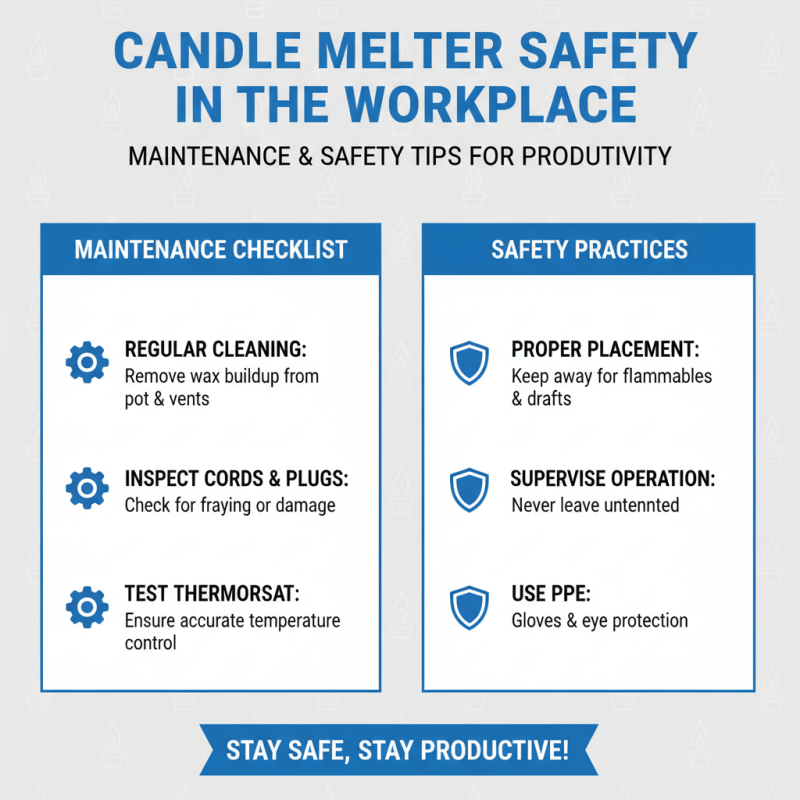
Candle melters are essential in various businesses, but proper maintenance and safety practices are crucial. Keeping your workplace safe ensures a productive environment. Regular checks can prevent accidents and equipment failures.
Invest time in cleaning your candle melters. Residue can build up over time, affecting performance. Use a soft cloth and appropriate cleaning solutions. Ensure the melter is unplugged before cleaning. This simple step can prolong the device's lifespan.
Temperature control is vital for safety. Overheating can lead to hazardous situations. Regularly monitor the melter's temperature settings. If you notice fluctuations, it may indicate a malfunction. Additionally, ensure that the area is well-ventilated. Proper air circulation reduces the risk of harmful fumes accumulating. Remember, safety should always come first in any workspace.